On June 6, 1820, about thirty members of Mother Bethel walked out and organised a congregation of their own. They called it the First Colored Wesley Methodist Church of Philadelphia. Within a year they had joined five other churches to form what became the African Methodist Episcopal Zion denomination — the Freedom Church.
They worshipped first in a carpenter’s shed at 521–527 Lombard Street while a brick church went up. Big Wesley is counted among the first five independent African American churches in Philadelphia.
In 1885 the congregation moved west to 15th and Lombard, the corner it still occupies, and became an anchor of the city’s historic Seventh Ward. The present Gothic Revival building was designed by George Espie Savage, begun in 1923 and completed in 1926: triple-portal doors, grand staircases rising either side of the foyer, and a sanctuary one flight up, ringed by a great U-shaped balcony.
Philadelphians have called it Big Wesley for generations. Within the denomination it carries another name: The Freedom Church. Since its inception, Wesley has been involved in action for the salvation, liberation and elevation of God’s people.
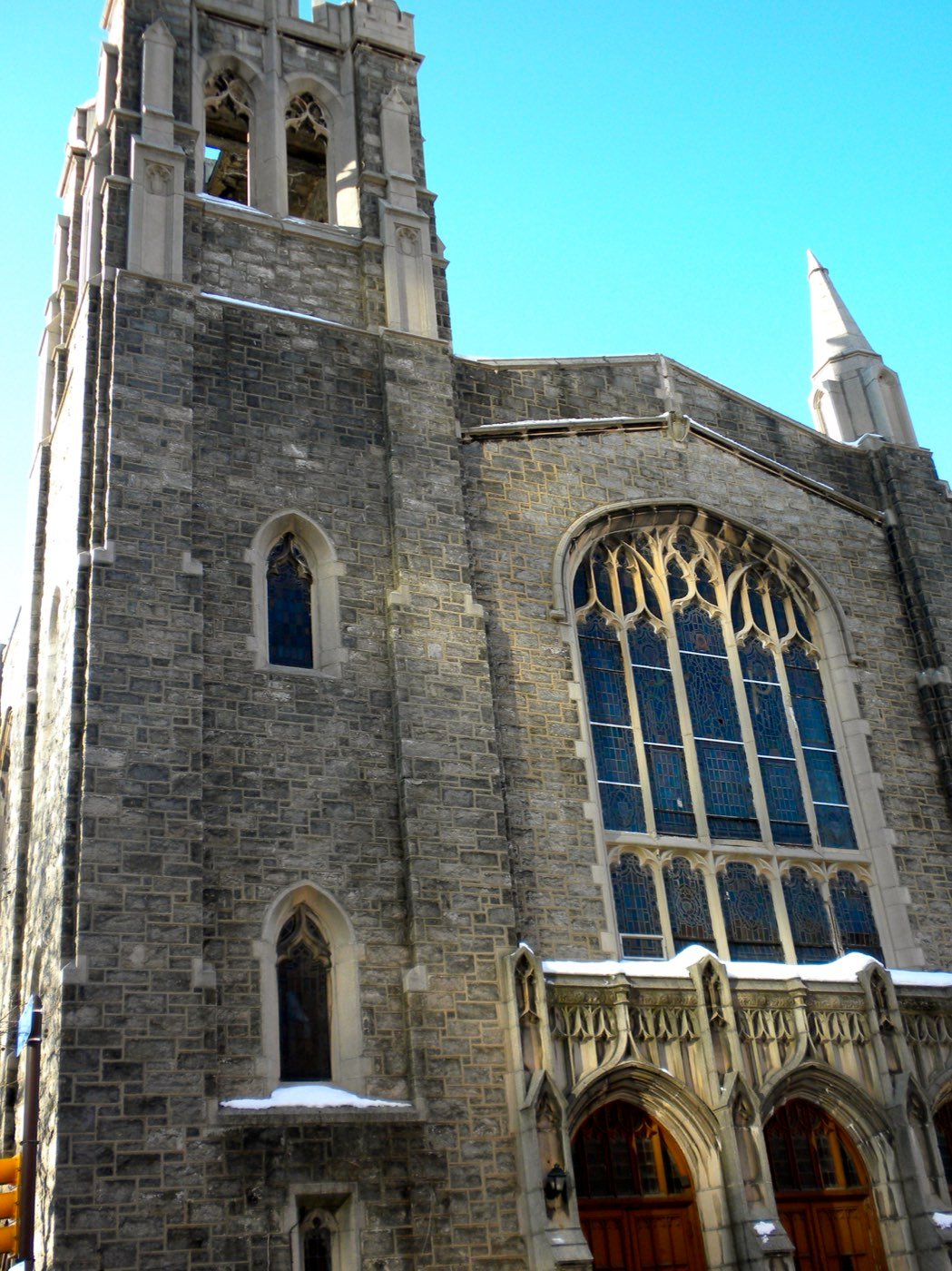
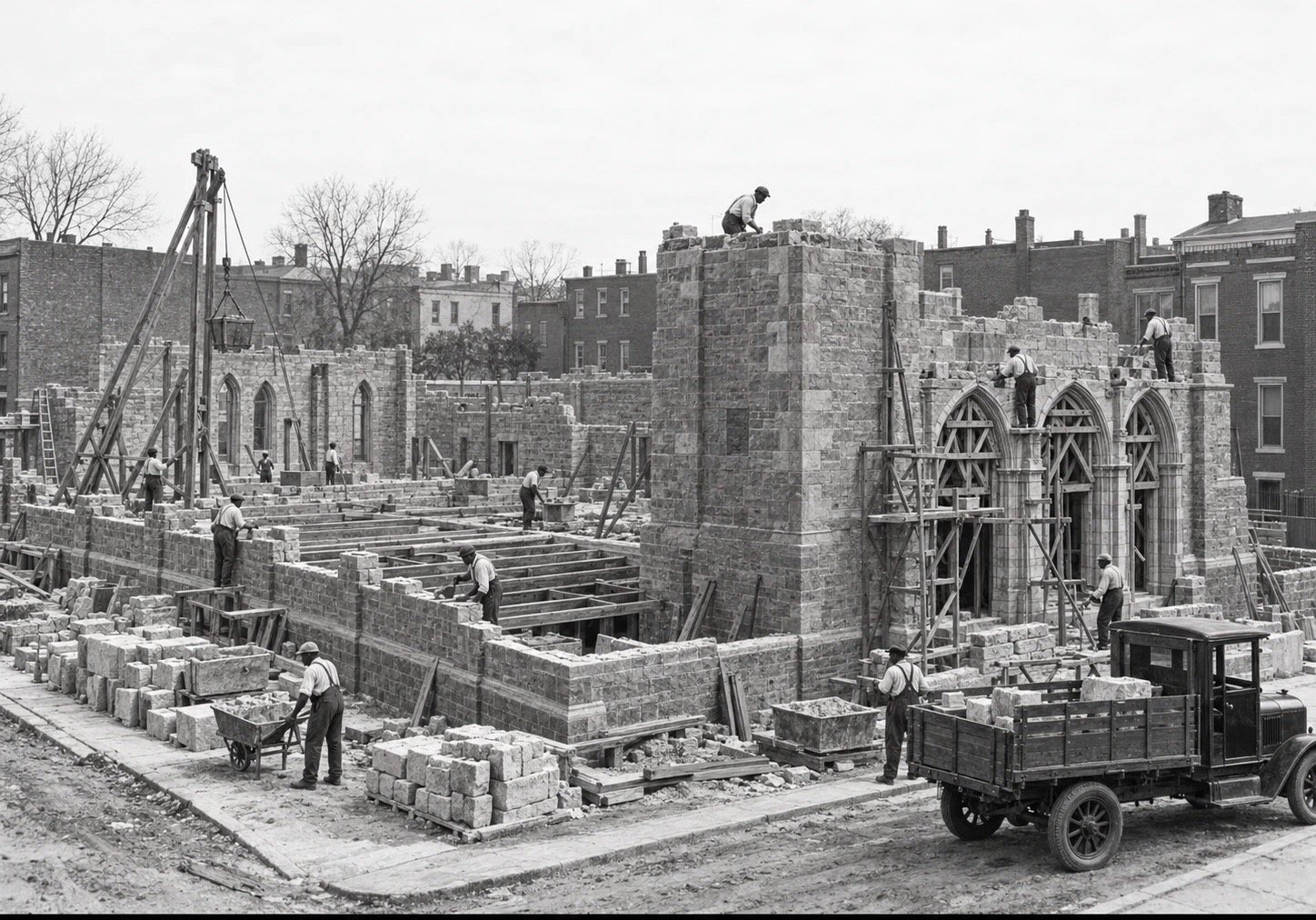
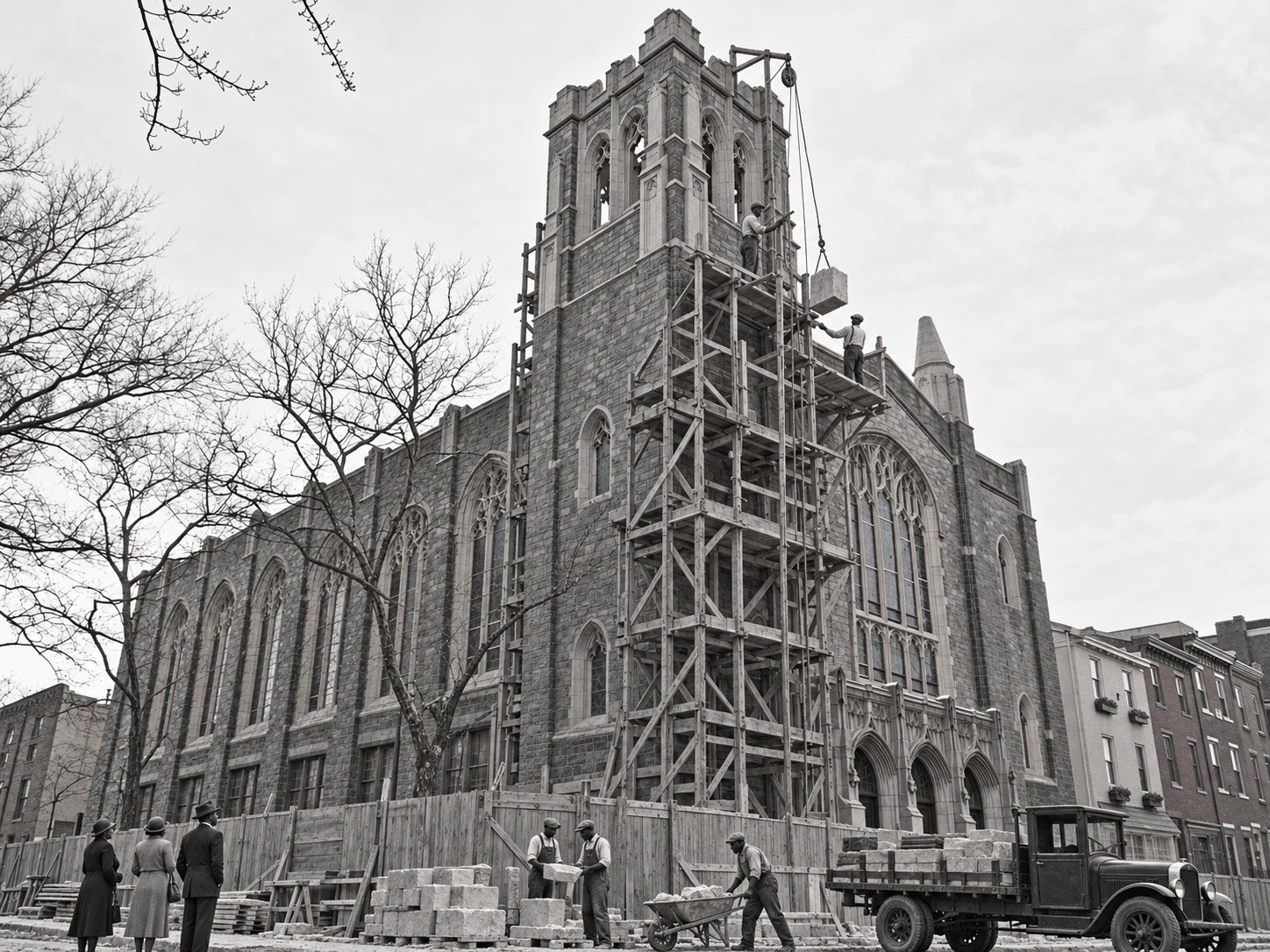
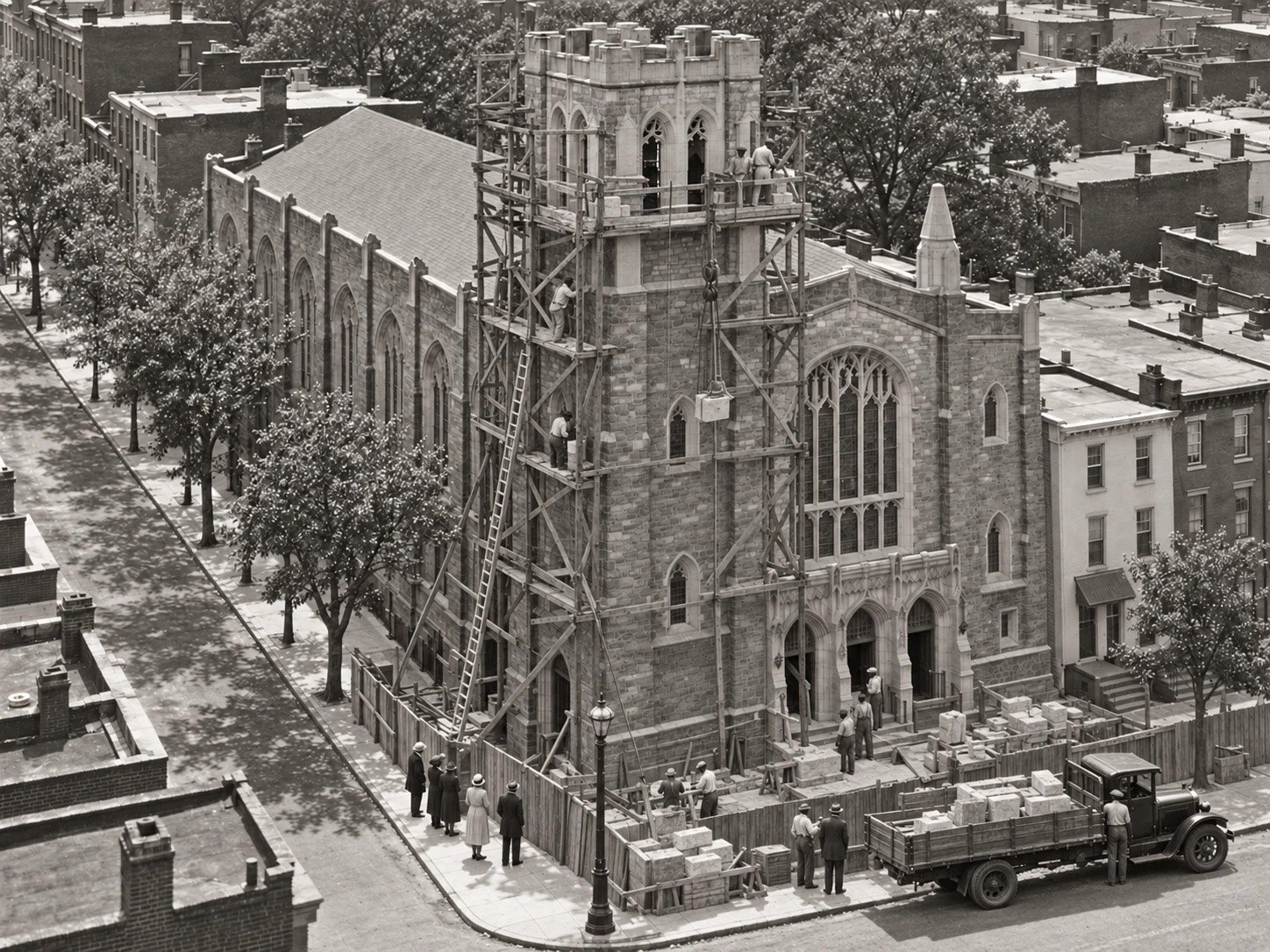
Stone by stone, the congregation raised the Gothic Revival church that still stands at 15th and Lombard, designed by architect George Espie Savage and completed in 1926. These pictures show what the church may have looked like while it was being built.


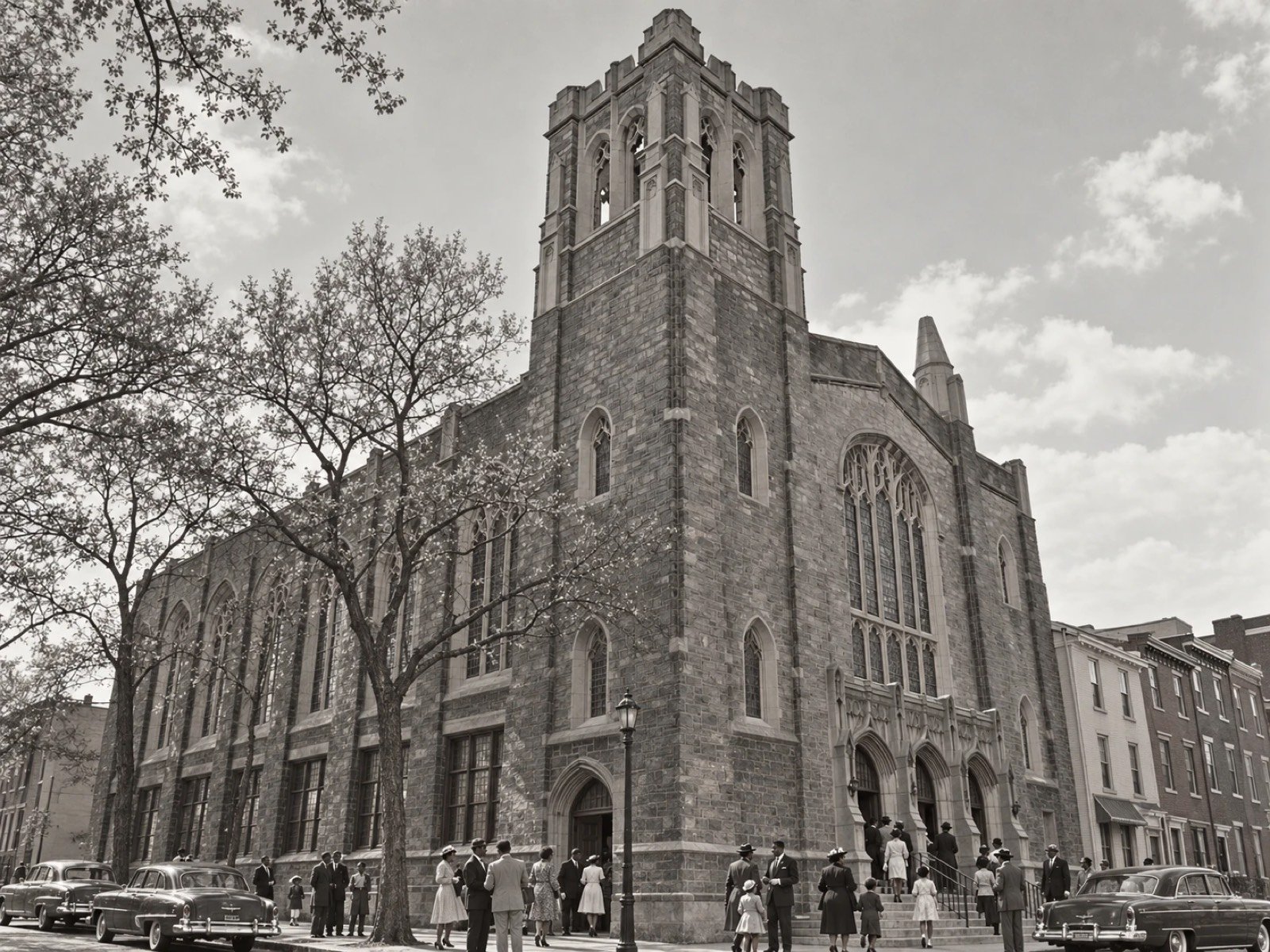
By mid-century the building on 15th and Lombard was thirty years old and the congregation more than a hundred and thirty. On Sunday mornings the steps filled with families in their best, and from this pulpit Rev. Alfred G. Dunston Jr. organised the 1952 boycott that opened better-paying jobs to Black Philadelphians.
The same doors, the same tower, the same corner — still open every Sunday.
June 6. About thirty members leave Mother Bethel and found the First Colored Wesley Methodist Church of Philadelphia. Worship begins in a carpenter’s shed on Lombard Street.
Wesley joins five other congregations to form the African Methodist Episcopal Zion denomination, and takes its present name.
At its earlier home on Lombard Street, the church hosts an anti-slavery convention attended by Frederick Douglass, Martin Delany, Henry Highland Garnet and Charles Lenox Remond.
The congregation moves west to 15th and Lombard, the corner it still occupies.
The Frederick Douglass Memorial Hospital and Training School, Philadelphia’s first Black hospital, opens next door at 1512 Lombard. Its opening ceremony is held at Wesley, and the congregation are among its supporters.
Rev. John E. Price — hymn writer, editor and founder of the Garnet Equal Rights League — serves as pastor and as presiding elder of the Philadelphia District.
The present Gothic Revival church is built to the designs of George Espie Savage.
In the depths of the Depression, by one account Big Wesley feeds some 34,000 people, gives out shoes and clothing, houses families free of charge in an apartment building it owns, and pays members’ health insurance premiums.
Under Rev. Alfred G. Dunston Jr., the church leads a boycott of businesses that would not hire Black Philadelphians into better-paying jobs — and wins.
The congregation sends funds to sustain the Montgomery Bus Boycott.
Rev. Dunston joins fellow pastors in establishing the Opportunities Industrialization Center, the job-training movement that began in Philadelphia and spread around the world.
Listed on the National Register of Historic Places, December 1.
Selected for the National Fund for Sacred Places, supporting restoration of the front facade and the stone tracery around the great stained-glass window.
The 200th anniversary. The Pennsylvania Historical and Museum Commission dedicates a state historical marker at the church door.
Part of the 1500 block of Lombard Street is ceremonially renamed Wesley Way at a June 2022 ceremony.
Facade restoration under way, and a licensed early learning centre taking shape in the lower level.
Big Wesley was never only a church. It has been a school, a pantry, a hiding place and a meeting hall — because the neighbourhood needed those things and nobody else was going to build them.
A partial roll, drawn from the public record. The full succession of pastors is being compiled from church archives — if you can help fill a gap, please contact the office.
Fifty years a minister. Hymn writer, editor of church publications, presiding elder, and founder of the Garnet Equal Rights League.
Led the 1952 jobs boycott, backed Montgomery, helped found OIC. Elected the 68th Bishop of the A.M.E. Zion Church in 1964.
Went on from the pulpit of Big Wesley to become the 93rd Bishop of the A.M.E. Zion Church.
Pastor and Teacher for sixteen years, and Presiding Elder of the Philadelphia District.
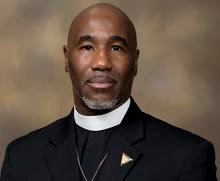
Rev. Dr. Michael King has served as Pastor and Teacher at Wesley for sixteen years. His preaching ministry spans twenty-nine years, including two other congregations in the Philadelphia area.
Dr. King serves as Presiding Elder of the re-organized Philadelphia District of the A.M.E. Zion Church and is the founding director of Share the Love, Inc., a Pennsylvania nonprofit. He is the immediate past President of the board of the Pennsylvania Council of Churches.
He holds degrees from Penn State University, Eastern University, United Theological Seminary and Wesley Theological Seminary.

We believe that the Holy Scriptures, Old and New Testament, contain all things necessary for salvation. We believe in God the Father Almighty, maker of heaven and earth, and in Jesus Christ, His only Son, our Lord — conceived of the Holy Ghost, born of the Virgin Mary, who suffered under Pontius Pilate, was crucified, died, was buried, and arose on the third day.
We believe He ascended into heaven and sits at God’s right hand, and that from there Christ shall return to judge the living and the dead. We believe in the Holy Ghost, the one universal Church, the forgiveness of sins, the resurrection of the body and life everlasting.
Dedicated in 2020 by the Pennsylvania Historical and Museum Commission.
Historical Marker Database →The Philadelphia Tribune on the 2022 renaming of the 1500 block of Lombard Street.
Read the story →Big Wesley’s profile as a member of the 2017 cohort.
View the profile →A concise public history with the Depression-era and civil rights record.
Read on Clio →The sanctuary is open before and after Sunday worship, and by appointment during the week. Group and school tours welcome.